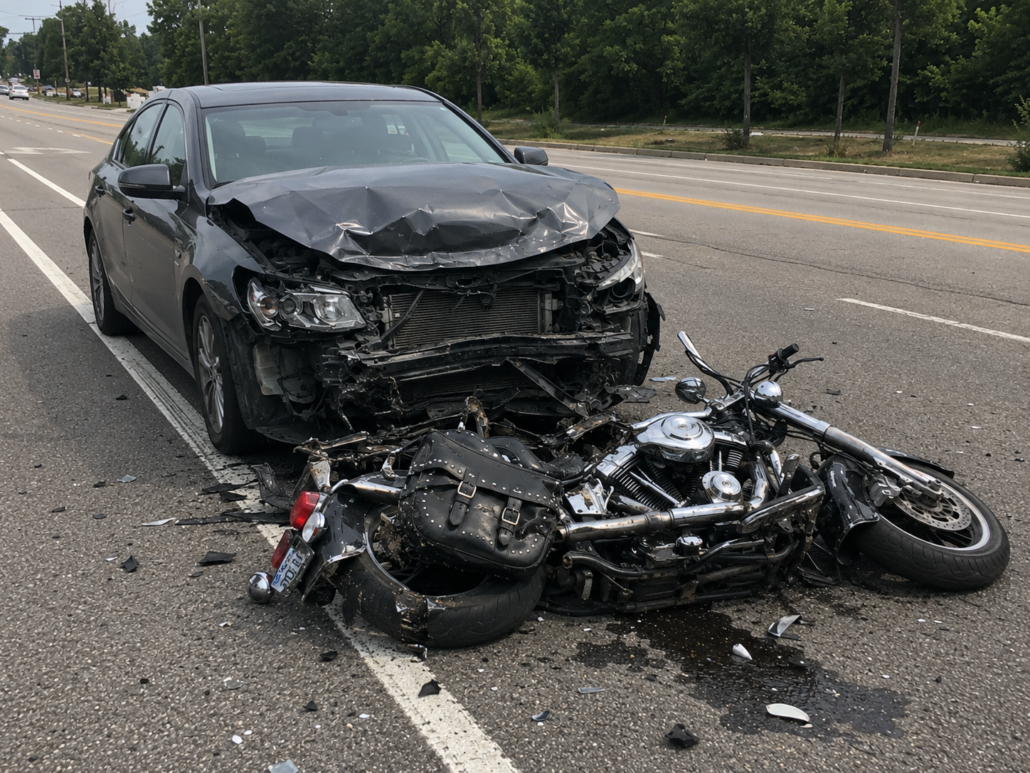

When a car rear-ends a motorcycle in Connecticut, the car’s driver may be responsible for following too closely, driving while distracted, speeding, or failing to stop in time. However, fault should be determined by reviewing the vehicle damage, police report, witness statements, photographs, video footage, and other available evidence.
Because motorcycles provide little physical protection, even a low-speed rear-end collision can throw a rider from the bike and cause serious injuries. The Connecticut motorcycle accident attorneys at Haymond Law Firm help injured riders investigate crashes, deal with insurance companies, and pursue compensation from responsible parties.
Who Is Responsible When a Car Rear-Ends a Motorcycle?
The driver of the car is often responsible when they fail to maintain enough distance to safely stop behind a motorcycle.
Connecticut law prohibits drivers from following another vehicle more closely than is reasonable and prudent based on traffic, speed, road conditions, and weather. A driver who follows a motorcycle too closely and causes a rear-end collision may be found negligent.
Common causes of rear-end motorcycle accidents include:
- Distracted driving
- Following too closely
- Speeding
- Failing to notice a stopped motorcycle
- Driving under the influence
- Poor visibility
- Unsafe lane changes
- Aggressive driving
- Mechanical or brake failure
The rear driver is not automatically responsible in every case. The insurance companies will investigate how the crash happened and may attempt to argue that the motorcyclist contributed to the collision.
What If the Driver Says They Did Not See the Motorcycle?
Failing to see a motorcycle does not necessarily excuse the driver who caused the crash.
Drivers are expected to pay attention to the roadway and watch for motorcycles, cars, pedestrians, and other road users. A statement such as “I did not see the motorcycle” may instead support an argument that the driver was distracted or failed to maintain a proper lookout.
Evidence that may help show the motorcycle was visible includes:
- The motorcycle’s working brake lights
- Headlight and lighting records
- Bright or reflective riding gear
- Witness statements
- Dash-camera footage
- Traffic-camera footage
- Surveillance video from nearby businesses
- Photographs of the roadway and lighting conditions
Can the Motorcyclist Be Blamed for the Accident?
An insurance company may try to place some responsibility on the motorcyclist by claiming that the rider:
- Stopped suddenly
- Changed lanes unexpectedly
- Was speeding
- Had a malfunctioning brake light
- Was riding between lanes
- Was not clearly visible
- Failed to use a turn signal
These allegations do not prove that the rider caused the accident. They must be compared with the physical evidence and witness accounts.
Connecticut uses a modified comparative negligence system. An injured person’s compensation may be reduced by their percentage of responsibility, and recovery may be barred when their negligence is greater than the combined negligence of the parties from whom damages are sought.
Because insurance companies may use comparative negligence to reduce a claim, riders should avoid admitting fault or guessing about what happened before the crash has been investigated.
What Evidence Can Prove a Rear-End Motorcycle Accident?
Evidence should be preserved as soon as possible after the collision.
Photographs and Videos
Photographs should show:
- The motorcycle’s rear damage
- The car’s front-end damage
- The final locations of both vehicles
- Debris and skid marks
- Traffic signals and signs
- Lane markings
- Road and weather conditions
- Visible injuries and damaged riding gear
Photos of the car’s crushed bumper, grille, hood, or headlights may help establish that it struck the motorcycle from behind.
Witness Statements
Independent witnesses may be able to explain:
- Whether the motorcycle was stopped
- Whether its brake light was working
- How fast the car was traveling
- Whether the driver appeared distracted
- Whether the driver attempted to brake
- How the rider was thrown from the motorcycle
Collect witness names and contact information at the scene whenever possible.
Police Report
The police report may include statements from the drivers, witness information, citations, diagrams, vehicle damage, and the responding officer’s observations.
The report is important, but it may not contain every fact needed to determine responsibility.
Dashcams and Surveillance Cameras
Video may be available from:
- The motorcycle rider’s helmet camera
- Another driver’s dashcam
- Traffic cameras
- Nearby businesses
- Homes with security cameras
- Public buses or commercial vehicles
Video can be erased quickly, so requests to preserve it should be made promptly.
The Damaged Motorcycle
Do not repair, sell, or dispose of the motorcycle before it has been properly photographed and inspected.
The location of damage to the rear wheel, fender, saddlebags, exhaust, frame, lights, and other parts may help establish the direction and force of the impact.
The helmet, clothing, boots, gloves, and damaged electronic devices should also be preserved.
What Should You Do After a Motorcycle Is Rear-Ended?
Call 911
Report the collision and request emergency medical assistance. A police investigation creates an official record of the crash.
Obtain Medical Treatment
Accept medical assistance when you are injured or experiencing symptoms.
Motorcycle accident injuries may not be immediately obvious because adrenaline can temporarily mask pain. Follow all medical recommendations and attend scheduled appointments.
Document the Accident
Photograph the motorcycle, the car, the roadway, debris, skid marks, traffic controls, and your injuries when it is safe to do so.
Exchange Information
Obtain the driver’s:
- Name
- Address
- Telephone number
- Driver’s license information
- Vehicle registration
- Insurance company
- Policy information
- License plate number
Avoid Discussing Fault
Do not apologize, admit responsibility, or speculate about the collision. Provide the police with truthful facts without guessing.
Report the Crash to Your Insurance Company
Notify your insurer promptly. Before providing a detailed recorded statement to another driver’s insurance company, consider speaking with an attorney.
Follow Your Treatment Plan
Keep appointments, follow medical instructions, and report new or worsening symptoms to your provider.
For a more detailed checklist, review Haymond Law Firm’s guide on what to do after a motorcycle accident in Connecticut.
Common Injuries After a Motorcycle Is Hit From Behind
Rear-end motorcycle crashes can cause a rider to be thrown forward, trapped between vehicles, or pushed into an intersection.
Common injuries include:
- Traumatic brain injuries
- Concussions
- Neck and back injuries
- Spinal cord injuries
- Broken arms and legs
- Pelvic injuries
- Shoulder injuries
- Knee and ankle injuries
- Internal organ damage
- Road rash
- Scarring and disfigurement
- Nerve damage
Riders should be evaluated by a medical professional even when they believe their injuries are minor.
What Compensation May Be Available?
The compensation available depends on the severity of the injuries, the available insurance coverage, lost income, future treatment needs, and each party’s percentage of responsibility.
A motorcycle accident claim may include compensation for:
- Ambulance transportation
- Emergency-room treatment
- Hospitalization
- Surgery
- Diagnostic testing
- Physical therapy
- Medication
- Future medical treatment
- Lost wages
- Reduced earning ability
- Motorcycle repairs or replacement
- Damaged helmets and riding equipment
- Pain and suffering
- Permanent disability
- Loss of normal activities
Every case is different. Haymond Law Firm publishes examples of real motorcycle accident case results, but prior results do not guarantee a similar outcome. The firm’s published cases show that motorcycle claims may require witness interviews, private investigators, accident evidence, and detailed documentation of the rider’s injuries.
What If the Driver Does Not Have Insurance?
When the responsible driver is uninsured or does not have enough coverage, the injured rider may be able to make an uninsured or underinsured motorist claim through an applicable insurance policy.
Available coverage depends on the rider’s policy, the motorcycle’s insurance, household policies, and the circumstances of the collision. The Haymond Law Firm motorcycle accident page explains that an uninsured motorist claim may be available when the responsible driver has no insurance.
Do not assume there is no available compensation simply because the other driver was uninsured.
Should You Speak With the Car Driver’s Insurance Adjuster?
The other driver’s insurance adjuster may ask for:
- A recorded statement
- Medical authorizations
- Information about previous injuries
- Access to medical records
- A description of your symptoms
- Permission to inspect the motorcycle
- A quick settlement agreement
The adjuster represents the insurance company, not the injured rider.
Do not sign a release or accept a final settlement until you understand the extent of your injuries and what rights you are giving up. A settlement release usually prevents you from seeking additional compensation later.
How Long Do You Have to File a Motorcycle Accident Claim?
Connecticut negligence claims are generally subject to a two-year filing period from when the injury was first sustained or discovered, with an outside limitation of three years from the act or omission involved. Exceptions and shorter notice requirements may apply in certain cases.
Waiting can also result in the loss of video footage, witness information, vehicle evidence, and other important records.
How Can Haymond Law Firm Help?
A rear-end motorcycle accident claim may require more than submitting medical bills to an insurance company.
The Haymond Law Firm personal injury team can investigate the collision, preserve evidence, identify available insurance coverage, document damages, and communicate with the insurance companies.
Depending on the case, the investigation may include:
- Obtaining the police report
- Interviewing witnesses
- Securing surveillance footage
- Inspecting the motorcycle and car
- Reviewing medical records
- Documenting lost income
- Investigating insurance policies
- Working with qualified experts
- Preparing the case for trial when necessary
Attorney John Haymond has represented seriously injured people for more than 40 years, and Haymond Law Firm has extensive experience representing motorcycle riders throughout Connecticut and the Northeast.
Frequently Asked Questions
Is the car driver automatically at fault?
Not automatically. However, front-end damage to the car, rear damage to the motorcycle, witness statements, video footage, and evidence that the driver was following too closely may establish responsibility.
Should I repair my motorcycle immediately?
The motorcycle should be fully documented and, when appropriate, inspected before repairs or disposal. Repairs may destroy evidence showing how the collision occurred.
Can helmet-camera footage be used as evidence?
Yes. Helmet-camera footage may help show the rider’s speed, lane position, traffic conditions, and the events immediately before the crash.
Can I recover compensation if I was not wearing a helmet?
Not wearing protective equipment does not automatically mean the rider caused the collision. However, the insurance company may argue that it affected the severity of certain injuries. The specific facts should be reviewed by an attorney.
What if the car pushed the motorcycle into another vehicle?
The driver who caused the initial rear-end impact may be responsible for the resulting chain reaction. The complete sequence should be investigated using damage patterns, witness statements, and video footage.
Should I keep my damaged helmet and clothing?
Yes. Preserve the helmet, jacket, gloves, boots, pants, and other damaged equipment. Do not throw them away or alter them before discussing the evidence with an attorney.
Speak With a Connecticut Motorcycle Accident Attorney
A motorcyclist rear-ended by a car may face serious injuries, extensive medical treatment, lost income, and the loss of their motorcycle.
Haymond Law Firm represents injured riders and understands the unique issues involved in motorcycle accident claims. The firm offers free case evaluations and is available 24 hours a day at 1-800-HAYMOND.
Contact Haymond Law Firm to discuss what happened.
If you go down, we’ll pick you up.