

Summer in Connecticut means road trips, beach days, motorcycle rides, concerts, cookouts, vacations, and holiday weekends. It also means more traffic, more distracted drivers, more teen drivers on the road, more motorcycles, more construction zones, and a higher risk of serious car accidents.
From Memorial Day through Labor Day, Connecticut roads can become especially busy. Families travel to the shoreline, drivers head toward New Haven, Hartford, Bridgeport, Waterbury, Stamford, Danbury, Mystic, casinos, beaches, lakes, concerts, and summer events. At the same time, highways like I-84, I-91, I-95, Route 15, Route 8, Route 9, and Route 2 often see heavier traffic and more impatient drivers.
If you or someone you love was injured in a summer car accident in Connecticut, it is important to know what to do next. The steps you take after the crash can affect your health, your insurance claim, and your ability to recover compensation.
The Connecticut car accident lawyers at Haymond Law Firm help injured drivers, passengers, pedestrians, and motorcyclists after serious crashes. Call 1-800-HAYMOND for a free consultation.
Why Do Car Accidents Increase During the Summer?
Summer driving is different from the rest of the year. More people are on the road, more families are traveling longer distances, and more drivers are heading to unfamiliar areas. Many crashes happen because drivers are distracted, tired, speeding, impaired, or simply not paying close enough attention.
Some of the biggest summer driving risks include:
- Heavy holiday weekend traffic
- More teen drivers out of school
- More motorcycles, bicycles, and pedestrians
- Long road trips and driver fatigue
- Speeding and aggressive driving
- Drunk or drug-impaired driving after parties, cookouts, and concerts
- Distracted driving from phones, GPS, passengers, and music
- Construction zones and changing traffic patterns
- Sudden summer storms and reduced visibility
- Tire blowouts and vehicle maintenance problems during hot weather
AAA has described the period between Memorial Day and Labor Day as the “100 Deadliest Days” for teen drivers. During this time, crash risks can increase because young drivers are out of school, spending more time on the road, and often driving with friends or distractions in the vehicle.
The National Highway Traffic Safety Administration also warns drivers to prepare their vehicles before summer road trips by checking tires, tread depth, fluid levels, belts, hoses, lights, wipers, and emergency supplies. Vehicle problems like worn tires or poor maintenance can become more dangerous during hot weather and long-distance travel.
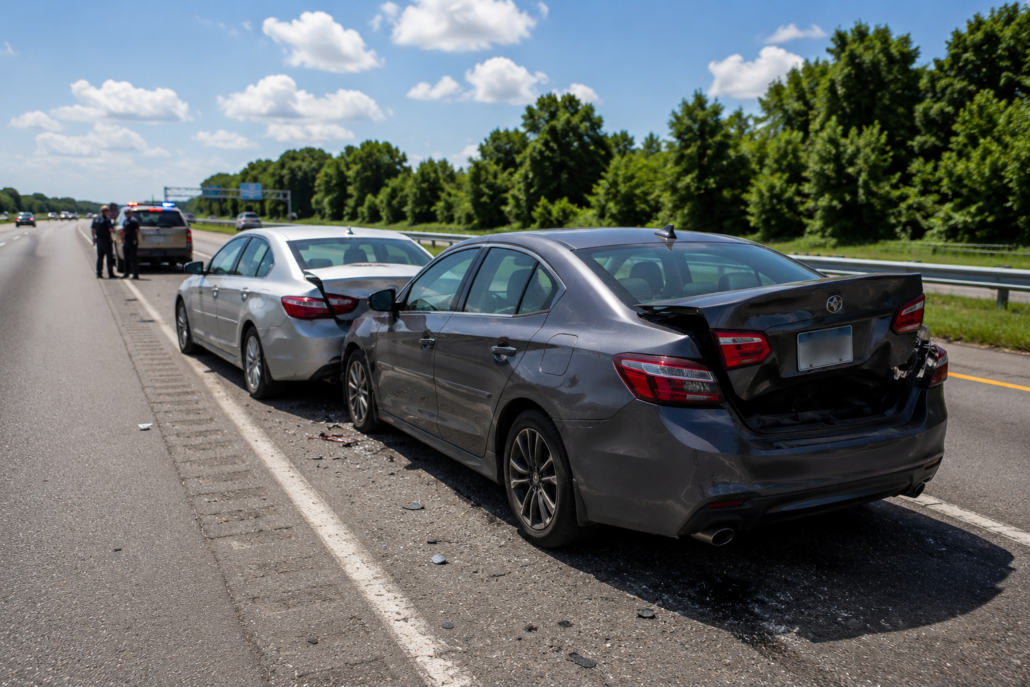
Connecticut Roads Can Get Busier During Summer Travel
Connecticut may be a small state, but it has some of the busiest travel corridors in New England. Summer traffic often increases near beaches, tourist areas, concerts, casinos, lakes, amusement parks, restaurants, and major event venues.
Drivers may see heavier traffic around:
- Hartford and I-84/I-91
- New Haven and the I-95/I-91/Route 15 area
- Bridgeport and Fairfield County commuter routes
- Waterbury near I-84 and Route 8
- Danbury and western Connecticut
- Stamford, Norwalk, Greenwich, and lower Fairfield County
- New London, Groton, Mystic, and shoreline travel routes
- Casino traffic near southeastern Connecticut
- Beach routes toward the Connecticut shoreline
Even local roads can become dangerous in the summer. Drivers may be unfamiliar with the area, looking for parking, following GPS directions, leaving events late at night, or rushing through intersections. These conditions can lead to rear-end crashes, T-bone accidents, pedestrian injuries, motorcycle accidents, and highway collisions.
If your crash happened in or near Hartford, you can learn more about Haymond Law Firm’s local office here: Hartford personal injury lawyer.
Holiday Weekends Are Especially Dangerous
Memorial Day, Fourth of July, and Labor Day are some of the busiest travel periods of the summer. More drivers are on the road, people are traveling longer distances, and many crashes happen late at night or after parties, cookouts, concerts, and gatherings.
According to AAA, driving remains the most common way Americans travel for Memorial Day weekend. In 2026, AAA projected that 39.1 million people would travel by car over Memorial Day weekend, making up 87% of all Memorial Day travelers.
Fourth of July is another dangerous period. The National Highway Traffic Safety Administration reports that from 2020 to 2024, 2,719 people were killed in motor vehicle crashes over the Fourth of July holiday period, and 38% of the drivers killed were drunk.
Holiday crashes often involve:
- Drunk driving
- Drug-impaired driving
- Speeding
- Distracted driving
- Fatigued driving
- Unfamiliar roads
- Heavy traffic leaving events
- Rear-end crashes in stop-and-go traffic
- Pedestrian accidents near restaurants, bars, parks, and fireworks events
If you were injured during a summer holiday weekend, do not assume the insurance company will handle the claim fairly. Serious injuries, disputed fault, uninsured drivers, and delayed symptoms can make the case more complicated.
Common Types of Summer Car Accidents in Connecticut
Summer crashes can happen in many different ways. Some involve minor property damage, while others cause serious injuries that require hospital care, physical therapy, surgery, or long-term treatment.
Rear-End Accidents
Rear-end crashes are common in summer traffic. Stop-and-go traffic on I-84, I-91, I-95, Route 15, Route 8, and local roads can lead to collisions when drivers follow too closely or look away from the road.
Rear-end accidents may cause whiplash, neck injuries, back injuries, concussions, shoulder injuries, knee injuries, and aggravation of prior medical conditions. Even if your vehicle does not look badly damaged, you should still get checked by a medical provider if you are in pain.
Intersection Crashes
Summer traffic can create dangerous intersections, especially when drivers are rushing, distracted, or unfamiliar with the area. T-bone crashes and side-impact collisions often happen when a driver runs a red light, rolls through a stop sign, fails to yield, or turns without checking traffic.
Intersection crashes can be especially serious because the side of a vehicle offers less protection than the front or rear.
Highway Accidents
Connecticut highway crashes can involve high speeds, sudden lane changes, merging traffic, construction zones, and chain-reaction collisions. Accidents on I-84, I-91, I-95, Route 15, Route 8, Route 9, and Route 2 can quickly become serious because vehicles are moving at higher speeds.
Highway crashes may involve multiple vehicles, tractor trailers, motorcycles, rideshare vehicles, or commercial drivers. If your crash involved a large truck, Haymond Law Firm also handles truck and tractor trailer accident claims.
Motorcycle-Related Crashes
Summer is peak riding season in Connecticut. More motorcycles on the road means drivers need to be more careful when changing lanes, turning left, opening doors, and entering traffic.
Motorcyclists are vulnerable because they do not have the same protection as people inside cars. If a summer car accident involved a motorcycle, visit Haymond Law Firm’s motorcycle accident lawyer page to learn more.
Rideshare and Passenger Accidents
Summer events, concerts, bars, restaurants, airports, train stations, and tourist areas often lead to increased rideshare use. If you were injured as a passenger in an Uber or Lyft, or if a rideshare driver caused your crash, your claim may involve multiple insurance policies.
Haymond Law Firm also handles Uber accident claims involving injured passengers, drivers, pedestrians, and other motorists.
Pedestrian and Bicycle Accidents
Warm weather brings more pedestrians and bicyclists outside. Drivers must watch carefully near crosswalks, parks, restaurants, beaches, sidewalks, parking lots, and downtown areas.
Pedestrian and bicycle crashes often happen when drivers are backing up, turning, speeding through neighborhoods, using their phones, or failing to yield.
Common Summer Car Accident Injuries
Car accident injuries can appear immediately or develop over several hours or days. After the adrenaline wears off, many people begin to feel pain in their neck, back, shoulders, head, knees, wrists, or hips.
Common injuries after summer car accidents include:
- Neck pain and whiplash
- Back injuries
- Herniated discs
- Concussions and traumatic brain injuries
- Shoulder injuries
- Knee injuries
- Broken bones
- Soft tissue injuries
- Chest and rib injuries
- Facial injuries
- Burns
- Internal injuries
- Scarring
- Emotional distress and anxiety after the crash
Do not ignore pain after a crash. Waiting too long to seek treatment can make your injury worse and may also give the insurance company a reason to question your claim.
What Should You Do After a Summer Car Accident in Connecticut?
If you are involved in a summer car accident, the steps you take immediately after the crash can make a major difference.
1. Call 911
Report the accident and request medical help if anyone is hurt. A police report can become an important part of your claim, especially if fault is disputed.
2. Get Medical Treatment
Even if you think you are okay, it is smart to get checked out. Some injuries do not fully appear right away. If you have pain, dizziness, headaches, numbness, weakness, stiffness, or trouble moving, seek medical care as soon as possible.
3. Take Photos and Videos
If it is safe, photograph the vehicles, license plates, road conditions, skid marks, debris, traffic signs, lane markings, visible injuries, and the surrounding area. These photos may help show how the crash happened.
4. Exchange Information
Get the other driver’s name, phone number, address, license plate, insurance company, policy number, and driver’s license information. If there are witnesses, get their names and phone numbers too.
5. Do Not Admit Fault
Be polite and cooperative, but do not apologize or admit fault at the scene. You may not know all the facts yet. Another driver may have been distracted, impaired, speeding, uninsured, or violating traffic laws.
6. Be Careful With Insurance Statements
You should report the crash, but be careful before giving a recorded statement to the other driver’s insurance company. Adjusters may ask questions designed to reduce the value of your claim or make your injuries sound less serious.
7. Save All Documents
Keep copies of the police report, medical records, discharge papers, bills, prescriptions, repair estimates, rental car receipts, missed work notes, and letters from insurance companies.
8. Contact a Connecticut Car Accident Lawyer
If you were injured, missed work, need treatment, or are being blamed for the crash, contact a lawyer before accepting a settlement.
How Do I Get a Connecticut Accident Report?
After a crash in Connecticut, you may be able to access accident information through the Connecticut Department of Emergency Services and Public Protection. According to the Connecticut DESPP, Accident Information Summaries are generally available to the parties involved in an accident and are available for thirty days from the date of the accident.
You can search for Connecticut Accident Information Summaries here: Connecticut DESPP Accident Information Summaries.
If the report is restricted or unavailable online, you may need to contact the police department or State Police troop that handled the crash.
Can I Still Make a Claim If I Was Partly at Fault?
Possibly. Connecticut follows a comparative negligence system. This means fault can be divided between the people involved in the crash. Under Connecticut law, an injured person’s damages may be reduced by their percentage of fault, and recovery may be barred if their percentage of fault is greater than the combined negligence of the responsible parties.
For example, if the insurance company claims you were partly responsible because you were speeding, changed lanes, stopped suddenly, or failed to avoid the crash, that does not automatically mean you have no case. The facts matter.
Evidence that may help determine fault includes:
- The police report
- Photos and videos from the scene
- Witness statements
- Dashcam footage
- Traffic camera footage
- Vehicle damage
- Road conditions
- Medical records
- Cell phone records, when relevant
- Accident reconstruction evidence
You can read Connecticut’s comparative negligence law here: Connecticut General Statutes § 52-572h.
Why You Should Be Careful With Quick Settlement Offers
After a summer car accident, the insurance company may contact you quickly. In some cases, they may offer money before you know how serious your injuries are. This can be risky.
Once you accept a settlement and sign a release, you may not be able to come back later for more money, even if your injuries get worse, you need surgery, or you miss more work than expected.
Before accepting a settlement, make sure you understand:
- The full extent of your injuries
- Whether you need future treatment
- Whether you may miss more time from work
- Whether your injuries are permanent
- Whether you have scarring, limitations, or long-term pain
- Whether all insurance coverage has been identified
- Whether the offer includes medical bills, lost wages, pain and suffering, and future damages
If you are unsure, speak with a car accident lawyer before signing anything.
What Compensation Can Be Available After a Connecticut Car Accident?
Every case is different, but injured accident victims may be able to pursue compensation for losses such as:
- Emergency room bills
- Ambulance bills
- Hospital care
- Doctor appointments
- Physical therapy
- Chiropractic treatment
- Orthopedic treatment
- Neurology visits
- Surgery
- Medication
- Medical devices
- Lost wages
- Loss of earning ability
- Pain and suffering
- Emotional distress
- Permanent injury
- Scarring or disfigurement
- Property damage
- Wrongful death damages, when applicable
The value of a car accident case depends on the facts of the crash, the seriousness of the injuries, the available insurance coverage, medical treatment, lost income, and how the injuries affect your life.
Why Call Haymond Law Firm After a Summer Car Accident?
Haymond Law Firm has spent decades helping injured people after serious crashes. Attorney John Haymond has been at the forefront of defending the rights of the seriously injured for more than 40 years.
The firm handles car accident cases throughout Connecticut, including Hartford, New Haven, Bridgeport, Waterbury, Danbury, Stamford, New London, and surrounding areas.
You can learn more about Haymond Law Firm’s car accident practice here: Car Accident Injury Lawyers in CT & MA.
You can also review examples of the firm’s results here: personal injury case results and real-life car accident case results.
Summer Car Accident FAQ
Are there more car accidents in the summer?
Summer can create more crash risks because there are more drivers, more road trips, more teen drivers, more motorcycles, more pedestrians, more construction zones, and more holiday traffic. Memorial Day through Labor Day is also known as a dangerous period for teen drivers.
What should I do after a car accident in Connecticut?
Call 911, get medical care, take photos, exchange information, get witness contact information, report the crash to insurance, save your documents, and speak with a car accident lawyer if you were injured.
Should I go to the hospital after a crash if I feel okay?
If you have pain, dizziness, headaches, numbness, confusion, stiffness, weakness, or any concerning symptoms, you should get medical care. Some injuries do not fully appear until hours or days after the accident.
What if the insurance company says the crash was my fault?
Do not assume the insurance company is right. Fault should be based on evidence. Connecticut’s comparative negligence law may still allow a claim depending on your percentage of fault and the facts of the accident.
Can I make a claim if I was a passenger?
Yes. Injured passengers may have claims against the driver of another vehicle, the driver of the vehicle they were in, or other responsible parties depending on how the crash happened.
What if the other driver does not have insurance?
You may still have options through uninsured motorist coverage, underinsured motorist coverage, or other available insurance policies. A lawyer can help review the available coverage.
Should I give a recorded statement to the other driver’s insurance company?
Be careful. Recorded statements can be used against you. Before giving a detailed statement to the other driver’s insurance company, consider speaking with an attorney.
How long do I have to file a car accident claim in Connecticut?
Deadlines can depend on the type of claim and the facts of the case. Because missing a deadline can hurt your claim, you should speak with a lawyer as soon as possible after the crash.
How much is my summer car accident case worth?
The value depends on your injuries, medical bills, lost wages, pain and suffering, property damage, permanent impairment, available insurance, and who was at fault.
Call Haymond Law Firm After a Summer Car Accident in Connecticut
If you were injured in a summer car accident in Connecticut, do not deal with the insurance company alone. Whether your crash happened during Memorial Day weekend, Fourth of July, Labor Day, a beach trip, a concert, a commute, or a family vacation, Haymond Law Firm can review your case and explain your options.
Call 1-800-HAYMOND today for a free consultation with the Connecticut car accident attorneys at Haymond Law Firm.
No fee unless we win.
References
- AAA — Memorial Day Weekend Travel Forecast
- AAA — The 100 Deadliest Days: Teen Driver Deaths Jump in Summer Months
- NHTSA — Summer Driving & Road Trip Tips
- NHTSA — Celebrate America Safely This July 4th
- Connecticut Crash Data Repository
- Connecticut DESPP — Accident Information Summaries
- Connecticut General Statutes § 52-572h — Comparative Negligence
- Haymond Law Firm — Car Accident Injury Lawyers in CT & MA
- Haymond Law Firm — Car Accident FAQ
- Haymond Law Firm — Personal Injury Case Results
This article is for general informational purposes only and is not legal advice. Every accident is different. If you were injured in a crash, speak with an attorney about your specific situation.